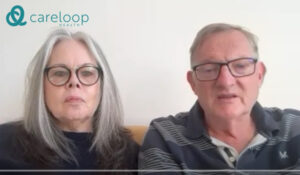
When a peer support worker walks into a room and says “I haven’t walked your exact path, but I’ve walked a similar one” – that’s not just reassuring. According to Shelby Fox, Trust Lead for Peer Support Work at Devon Partnership Trust, it’s what makes peer support so distinct from other roles in mental health care. Many clinical staff have their own lived experience, but the peer support worker role carries an explicit requirement to share it. “The peer support worker role explicitly requires them to share their lived experience as part of their role,” she explains, “whereas a nurse or a clinician can go day by day and never have to share anything.” They show up every day ready to draw on experiences that are sometimes difficult – professionally trained to do so in a way that is safe, meaningful, and compassionate.
The impact shows up in small but powerful ways. Shelby describes a peer support worker who noticed a service user was struggling with side effects from their medication – feeling groggy in the mornings and reluctant to get out of bed. Drawing on her own experience, she suggested taking the medication in the evenings instead. Once approved by the relevant clinician, that simple change made a tangible difference to that person’s daily life. “Clinical staff that haven’t taken that medication wouldn’t know the kind of side effects you have,” Shelby says, “but when somebody has been there and knows from first-hand experience, they’re able to offer that different perspective.”
Katy Malone, Digital Navigator for CareLoop at Devon Partnership Trust, describes a similar moment. An individual was determined to use the CareLoop app as part of their care but kept running into difficulties. Rather than leaving that person to disengage, Katy took the time to understand the root cause – something deeply personal, connected to their illness. The solution was simple: someone to sit with them while they got started. “In the end, that person really just needed somebody to be with them,” Katy says. “They went on to engage fully, and now it’s a relevant and useful part of their care.”
Both Katy and Shelby point to something broader: peer support workers aren’t an add-on to care – they’re an integral part of it. Services with people with lived experience actively present are services where hope is offered, where someone can say “you’re not alone” and genuinely mean it. Shelby argues that the next step is ensuring this contribution is formally recognised. “Their qualification is their life experience,” she says, “and that’s just as valuable as the learnt experience from other traditional roles.”
At CareLoop Health, peer support is central to how our relapse prevention platform is introduced and used. Our digital navigators – people with their own lived experience of mental illness – work alongside care teams to help service users engage with the app, overcome barriers, and feel genuinely understood. It’s an approach that reflects something we believe deeply: lived experience is expertise.